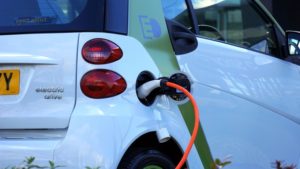
Electric cars are inexorably coming into our life. Many car owners around the world prefer them instead of traditional vehicles with internal combustion engines. In general, the percentage of EVs — not hybrids — constantly grows. It happens because stricter environmental regulations are being accepted. As a result, the issue connected with such a topic as electric car charging stations becomes more acute. Let’s find out more about the types of electric vehicle chargers that can be found.
Definition of Electric Car Charger
In simple terms, we would say that charging an electric vehicle is electrical equipment for filling the traction battery with necessary energy. It doesn’t look like usual smartphone chargers and moreover, it even differs from each other. Any electric vehicle needs to have an appropriate charging station:
- scooters;
- trucks;
- cars;
- buses;
- boats.
One has to take into consideration that depending on the type of charging, an electric vehicle might be charged for twelve hours or fifteen minutes. Besides, the charging speed can be various because of several things: the battery capacity of your e-vehicle, the converter type inside the auto, and the power of a charging station. If the current is quite high, the process of e-charging is fast. For instance, we need to mention that some DC charging stations produce up to 250 A. It’s also significant to take into account the fact that the battery capacity of e-cars is much higher than that of any other home-use device. As a result, the larger the capacity, the more time it takes to fill it with electricity. We can make a conclusion that the choice of an e vehicle charging station is incredibly vital.
Types of Chargers
The affordable and easy way is charging from your outlet at home with a voltage of 220 V. In this case, the necessary cable is required only. It’s usually connected to the car. It converts the alternating current of the network into the direct current needed for the battery. Car charging companies don’t recommend using such a way of charging as it has low speed and takes a lot of time. For example, charging a 60-kWh battery may take all day long. It’s not convenient for every day. At the same time, we can say that such a method is the best for your battery and increases its service life.
Direct current charging at special stations is the most powerful and fastest option. The current might reach 125 A when the voltage can be up to 500 V. Moreover, you can get the power to 65 kW. To connect to such stations, a special wire with a kind of CHAdeMO connector is required. Besides, one needs to remember the frequent use of fast charging stations might make a battery life shorter.
Wireless charging is a really efficient way of charging. The station is set in a special parking lot (it can be in its own garage too), and the receiver is installed under the bottom of the electric car. Currently, a huge number of companies are experimenting with this type of charger, among them Evatran, Plugless, BMW, Volvo, Evatran, and WiTricity.
Final Words
All in all, the main differences between charging stations for electric vehicles are clear now. You can choose the best option and charge your car in a fast and convenient manner.